Four Mangosuthu University of Technology staff members have placed MUT firmly among the institutions shaping global conversations on sustainability, innovation and inclusive development, presenting posters at the Energy Water Food Climate Nexus (EWFC) International Summit in Mexico this month. Spanning science communication, chemical engineering and digital innovation, their work reflects MUT’s growing footprint in international academic spaces and advancing internationalisation agenda under IGNITE 2030.
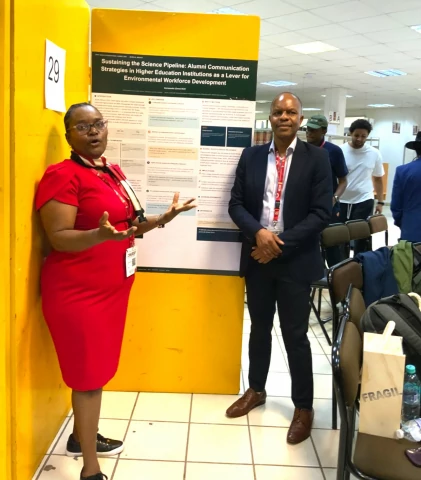
Director: Stakeholder Relations Management, Zama Sishi, presented findings from her ongoing PhD study on alumni communication in post-merger higher education institutions. Her research shows how strategic, values-based alumni engagement strengthens the pipeline of graduates entering environmental science, water engineering and food security careers directly speaking to the Nexus’s workforce development mission and offering a model with relevance across the Global South.
Dr Melvin Mothoa, Postgraduate and Postdoctoral Fellowship Officer in the Higher Degrees office in the Research Directorate explored how big data analytics can help small and medium enterprises innovate, improve decision-making and adopt more sustainable practices, linking digital entrepreneurship to the UN Sustainable Development Goals on decent work, industry innovation, and responsible consumption.
Njabulo Mdlalose, Finance and Procurement Officer in the Technology Station in Chemicals (TSC) working alongside Dr Xolile Ngubane, Senior Director in the Office of the Vice-Chancellor, presented on digital water stewardship in South Africa’s chemicals industry, examining whether smart monitoring and machine learning technologies can realistically be adopted by small and micro enterprises to improve water quality management and support the country’s green industrial transition.
Mbali Mkhize’s paper made the case for Collaborative Online International Learning (COIL) to advance inclusive internationalisation across African higher education showing how virtual global partnerships can build research networks and student competencies without the cost and carbon footprint of physical mobility.
Despite language barriers, the posters were extremely well received by the students, researchers and scholars who attended the summit, with many engaging enthusiastically with the MUT team during the interactive poster session. Congratulations to our colleagues for representing MUT so proudly on the global stage!