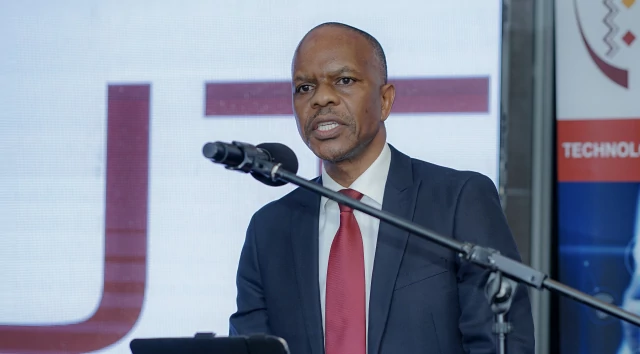
MUT reaffirmed its commitment to impactful scholarship and community-driven solution building during its Research and Innovation Colloquium held off-campus on 5 November 2026. Delivering the official opening address, MUT Deputy Vice-Chancellor: Research, Innovation and Engagement (RIE), Professor Mncedisi Maphalala, emphasized that the colloquium serves as a pivotal milestone within the Institution’s broader strategic research agenda. Addressing an audience of academic experts, government representatives, researchers, and postgraduate students, Professor Maphalala highlighted the urgent need to bridge academic research with tangible social and economic transformation.
“The purpose of this colloquium is to strengthen our research culture, support emerging researchers and postgraduate students, and build partnerships that respond to real challenges,” stated Professor Maphalala. Professor Maphalala further underscored MUT’s focus on translating academic output into real-world applications, pointing out the necessity of strengthening pathways from research publications toward technology transfer, commercialisation, and innovation. “For MUT, these conversations must lead to action: stronger research collaborations, relevant projects, and solutions that improve people’s lives,” he added.
The event featured a distinguished roster of academic leaders and contributors such as Keynote Speaker Professor Andile Khathi, Deputy Dean and Academic Leader: School of Medicine at the University of KwaZulu-Natal; Professor Sithabile Ntombela, from the University of Zululand; Nolene Singh, from Stellenbosch University; Dr Elmary Buis, from National Intellectual Property Management Office (NIPMO), which is part of the Department of Science, Technology and Innovation (DSTI); Professor Justine Visagie, from the Southern Centre for Inequality Studies at the University of Witwatersrand; and Professor Nkonki-Mandleni, from MUT’s CEAD.
Encouraging an interactive and collaborative atmosphere, Professor Maphalala urged all delegates to actively engage, exchange ideas, and establish cross-sector partnerships aimed at connecting research excellence with meaningful societal impact.