In celebration of World Environmental Health Day (WEHD) 2026, the Department of Environmental Health at Mangosuthu University of Technology (MUT) hosted a comprehensive five-day build-up programme from 31 August to 4 September 2026. Led globally by the International Federation of Environmental Health (IFEH), WEHD is observed annually on 26 September to highlight the essential role of Environmental Health in public health, disease prevention, sustainable development, and community protection.
This year’s theme, “Standing with Science to Protect Communities,” underscores the critical need for scientific evidence, reliable data, and professional expertise to guide Environmental Health policies, address emerging risks, and safeguard public well-being.
To extend the impact beyond a single day, MUT’s Department of Environmental Health, under the leadership of Head of Department Dr Thobile Poswa, structured a five-day programme around five key pillars: Setting the Scene, Knowledge Exchange, Practical Application, Critical Analysis, and Reflection and Action.
The programme was designed to bridge the gap between classroom theory and real-world execution, allowing students to actively engage with seasoned Environmental Health Practitioners (EHPs), government representatives, professional bodies, and local schools.
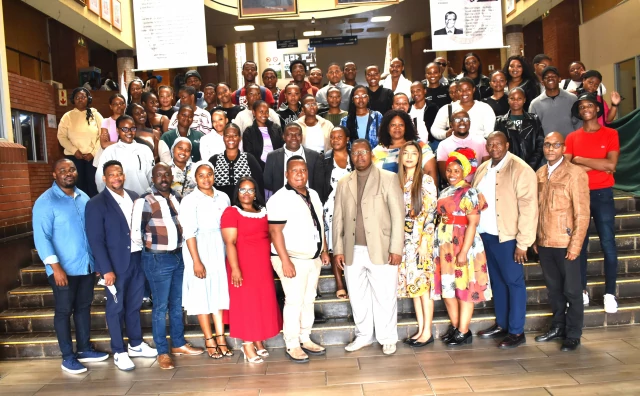
The build-up event opened on 31 August 2026 with an extensive gathering of sector leaders and public officials. Representatives from various government spheres, municipalities, and professional institutions participated alongside MUT students and staff. These were the KwaZulu-Natal Department of Health Head Office, Malaria Control Programme in Jozini, South African Institute of Environmental Health (SAIEH), South African Local Government Association (SALGA), and the KZN Department of Economic Development, Tourism and Environmental Affairs (KZN EDTEA), eThekwini Municipality, City of Ekurhuleni, Ugu District Municipality, OR Tambo District Municipality, Alfred Nzo District Municipality, uMkhanyakude District Municipality, and iLembe District Municipality.
This diverse attendance offered students rare, direct access to expert insights across major Environmental Health domains, including food control, vector control, water quality, communicable disease control, healthcare waste management, radiation monitoring, Port Health, and environmental law. The dialogue highlighted how local environmental conditions, population needs, and public health priorities shape regional EHP practices across South Africa, all while adhering to shared legislative and scientific standards.
The second day emphasised interactive dialogue, positioning MUT students not merely as passive listeners, but as emerging EHPs capable of evaluating and shaping future public health responses. On the following day the initiative shifted toward community outreach and practical application. The Department hosted learners and educators from two local schools, Adams College and Silimela Primary School, for an educational tour of MUT’s microbiology laboratory.
During the tour, learners received hands-on exposure to microbiological science, learning how micro-organisms affect human health and environmental safety. Guided by MUT Environmental Health staff who assisted in facilitating the sessions, the initiative sought to spark early interest in science careers while fulfilling the 2026 theme’s mandate to use science in service of community protection.
Reflecting on the success of the build-up events, Dr Poswa noted that protecting human health fundamentally depends on protecting the environments where people live, work, and learn.
By unifying academics, municipal officials, practitioners, and learners, MUT’s 2026 WEHD Build-Up Programme successfully showcased the pivotal role of evidence-based practice and inter-sectoral collaboration in preventing health hazards before they cause harm to communities.