
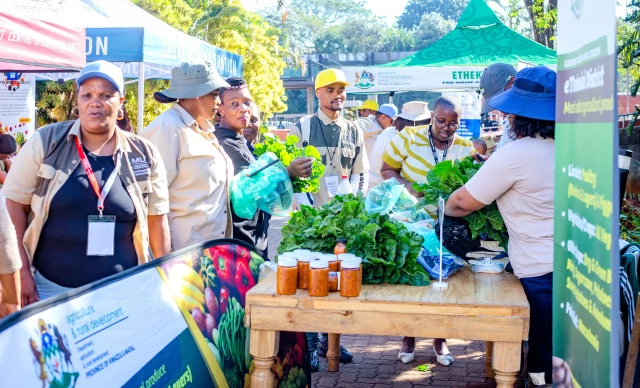
Mangosuthu University of Technology’s main campus is set to transform into a vibrant marketplace once again on 16 July 2026. The Institution’s Anniversary Lane will host local farmers who will showcase and sell a wide variety of indigenous foods to University staff, members of the surrounding community, and other stakeholders. This Market Day is presented by the Department of Agricultural Extension and Sustainable Food Systems, in collaboration with MUT’s Research directorate and the KwaZulu-Natal Department of Agriculture and Rural Development (KZN DARD), “as we jointly promote food security and strengthen the resilience of local farmers and food systems”, said event organiser Professor Xolile Mkhize, from the Department of Agricultural Extension and Sustainable Food Systems, formerly the Department of Community Extension. This year’s event will run under the theme: “Accelerating food system transformation in South Africa through indigenous food promotion.”
Professor Mkhize confirmed that the market has officially become an annual fixture. The primary objective is to bring the immense value of indigenous foods as part of local cultural heritage. Professor Mkhize described these foods as “high-value, nutrient-rich, and climate-resilient,” and said they should be at the forefront of public awareness.
“Our main goal is two-fold,” Professor Mkhize explained, emphasising the drive toward sustainable, resilient, and inclusive food systems. “We want our communities to go back to what their forebears used to do, use soil to derive a good livelihood for their families. We are appealing to them to plant indigenous foods, which are good for their health and support local farmers. Indigenous foods are highly nutritious and have been neglected and are increasingly being displaced by highly processed diets rich in added sugars, salt, and unhealthy fats. It is time we proudly bring them back onto our plates for better nutrition, health, and cultural pride.”
Beyond health benefits, Professor Mkhize highlighted the economic necessity of supporting local supply chains. “The event also aims to highlight the importance of the markets where these indigenous foods are available. Buying from these markets will have a positive effect on emerging farmers, ensuring communities are buying good quality food while creating new opportunities for indigenous foods to thrive,” she said.
The initiative has garnered strong institutional backing, with the eThekwini Municipality and the KwaZulu-Natal Department of Agriculture and Rural Development (DARD) among the key organisations supporting the event.
Reflecting on previous success, Professor Mkhize appealed to MUT staff to replicate the enthusiastic turnout of last year’s inaugural market. “You will recall that last year MUT staff came out in numbers and bought what was on sale. Some farmers even ran out of stock. This time, we are expecting more stock from the farmers,” she noted.