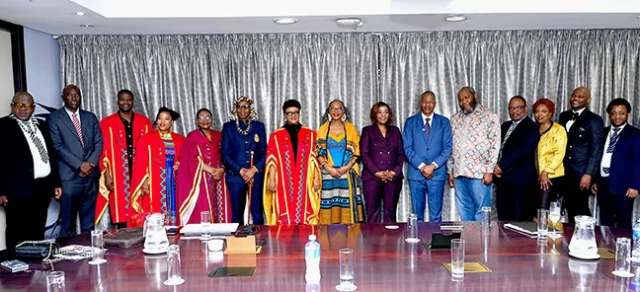
Mangosuthu University of Technology (MUT) reaffirmed its commitment to becoming a future-fit, globally competitive institution during the Founder’s Annual Lecture held at the Durban International Convention Centre on 3 October 2026.
Under the theme, “Towards 2030: MUT’s Shared Vision for South Africa’s Higher Education Contribution to the Global World of Work,” the lecture brought together university leadership, industry representatives and strategic stakeholders to reflect on MUT’s founding vision and its relevance to the changing demands of higher education and the workplace.
The gathering honoured the enduring legacy of MUT’s Founder, Prince Mangosuthu Buthelezi, whose vision of expanding access to technological education continues to inspire the University’s development.
Delivering the keynote address, Zwelakhe Mnguni, Chief Investment Officer and Co-Founder of Benguela Global Fund Managers, challenged universities to rethink how they prepare graduates for an increasingly competitive and technology-driven economy.
His thought-provoking address presented seven strategic propositions, including developing entrepreneurial graduates, creating responsive curricula, integrating artificial intelligence into teaching and learning, leveraging institutional procurement to support student entrepreneurship, and establishing partnerships that translate knowledge into economic opportunities.
Vice-Chancellor and Principal, Professor Rushiella Songca, positioned the lecture as an important platform for advancing MUT’s IGNITE 2030 Strategy, particularly its ambitions around curriculum transformation, research excellence, financial sustainability and strategic partnerships.
She emphasised the importance of strengthening relationships with industry, government and international partners to unlock resources, expand opportunities for students and enhance MUT’s contribution to socioeconomic development.
The lecture also reinforced the collective responsibility of the University Council, executive management, academics, staff, students and external partners in translating the institution’s strategic aspirations into measurable outcomes.
The overarching message was that honouring the Founder’s legacy requires more than remembering the past. It demands bold decisions, meaningful partnerships and collective action to ensure that MUT graduates are equipped not only to participate in the future world of work, but to shape it.