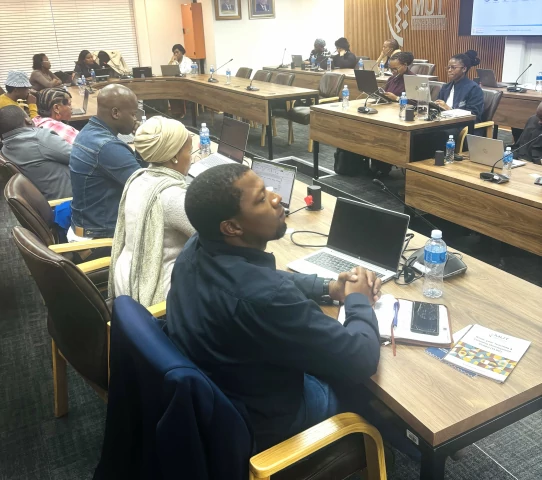
Research excellence at MUT is set to continue, following the University’s latest effort to forge ahead with this necessary leg of its existence. On 17-18 September 2026, MUT’s Research Directorate hosted the NRF Next Generation and Emerging Researchers Workshop, a high-impact gathering designed to elevate early-career academics and boost institutional research output. Guided by the overarching National Research Foundation (NRF) Next Generation and Emerging Researchers (NGER) theme, “Research for a Better Society,” the workshop reinforced the critical role emerging scholars play in producing socially responsive, innovative research to address South Africa’s key societal challenges.
The gathering brought together a diverse group of academic and professional support staff with a shared interest in expanding institutional research development. Demonstrating strong executive commitment to advancing the research agenda, key leadership figures were in attendance, including the Deputy Vice-Chancellor: Research, Innovation and Engagement (RIE) Professor Mncedisi Maphalala, and Acting Director of Research, Dr Mandla Hlongwane. Their presence highlighted the Institution’s top-level dedication to building research capacity and supporting early-career scholars.
Mthobeli Myeza, NRF and Pre-Grants Administrator, said the primary objective of the workshop was to demystify complex funding pathways, and empower researchers to strategically navigate major NRF development instruments, including the Thuthuka, Black Academic Advancement Programme (BAAP), and Rating Track initiatives. “By unpacking these strategic funding avenues, the session demonstrated how scholars can leverage national support structures to build competitive profiles, expand output quality, and systematically progress toward formal NRF rating and recognition,” said Myeza.
Attendees gained comprehensive insight into how specific funding instruments target key career milestones. The BAAP’s presence highlighted systemic transformation. BAAP remains central to driving equity, ensuring increased representation and accelerated advancement for Black academics across South Africa’s higher education sector; while the NRF Thuthuka tracks provide structured development pathways. “The PhD Track assists researchers in completing higher degrees and honing methodologies, while the Post-PhD Track enables early-career doctorate holders to transition into self-directed researchers with strong publication records,” said Myeza. The meeting also highlighted the importance of the “Rating Track”, which guides established and emerging academics toward formal peer-reviewed standing, significantly enhancing their international research footprint and competitive edge.
Reflecting on the session, Dr Ayanda Magwenyane from MUT’s Department of Chemistry, noted the practical value of examining real-world proposal dynamics.
“Attending the workshop provided me with valuable insights into the NRF funding application process and the key factors that contribute to successful proposals,” said Dr Magwenyane. “The workshop helped me identify some of the shortcomings and barriers that may have affected my previous applications, which I will carefully consider when preparing future submissions. I particularly benefited from the sessions on common proposal mistakes, funding frameworks, and critical success factors.”