
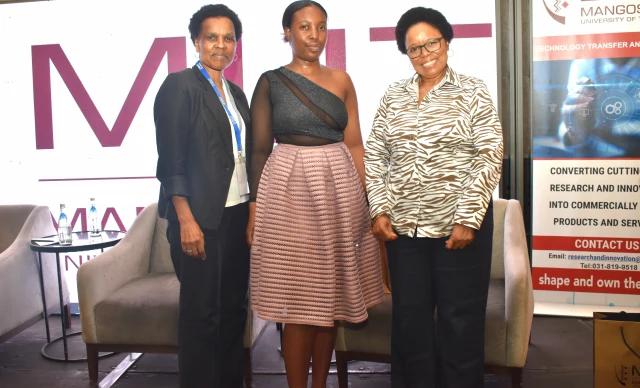
Moving from an emerging researcher to an established scholar requires deliberate daily choices, strong systems, and active engagement with university support networks, according to Professor Thabile Ntombela of the University of Zululand. Addressing attendees at the Mangosuthu University of Technology Research Colloquium held off-campus on 5 November 2026, Professor Ntombela urged academics and postgraduate students to shift their mindsets from mere “consumers of knowledge” to active contributors and authors in their respective fields.
Drawing a parallel between academia and elite sports, Professor Ntombela stressed that top performance is never an accident. “I have not heard of someone successful who just stumbled on a success path,” Professor Ntombela stated. “When you think of sports people like the Springboks or Bafana Bafana, a lot of hours, routine, and sacrifice go into who they become. It is the same in academia. Those who put in the time create systems and routines that assist them to become more professional and visible.”
Professor Ntombela cautioned delegates against settling into roles solely as teachers. Higher education demands critical engagement and the generation of new solutions for real-world issues. “In higher education, you can’t just teach material and end there,” she noted. “The material you use to teach comes from people like you. In order for your work to be read and taught elsewhere, you have to advance beyond being just a teacher.”
Professor Ntombela emphasized that research must address societal and sector-specific challenges to avoid becoming irrelevant. “If we do not address problems in our field, we become white elephants, producing research that is not used by anyone and does not benefit anyone,” she said.
During an interactive segment of the address, participants highlighted key obstacles hindering research productivity. Some of these are high teaching loads and administrative demand. Academics must balance heavy lecture schedules with unexpected student consultations and administrative emergencies. There are also competing personal responsibilities, like managing family duties alongside academic timelines.
Professor Ntombela also pointed out that there are infrastructure and resource limits that academics must contend with. And there are career advancement pressures. She said academics must navigate qualification and publication requirements for promotion.
Responding to these challenges, Professor Ntombela acknowledged that unexpected interruptions are constant, making strict time defence and personal discipline vital. She advised researchers to set clear boundaries, such as non-negotiable writing blocks, and maintain consistency despite daily demands.
Professor Ntombela outlined actionable steps for emerging scholars seeking to build a robust research profile. “Read and publish continuously. Engage with current literature to identify research gaps and enter active scholarly debates,” she said. And continued: “Embrace peer review and feedback. Treat manuscript rejections and critique as essential learning opportunities, rather than setbacks, and leverage mentorship and supervision by seeking multiple mentors inside and outside the institution, and co-supervise postgraduate students to hone research leadership.”
She also asked the attendees to engage institutional support by making specific operational needs, such as software licenses or lab equipment, known to university research offices, while taking full advantage of available writing retreats, grant workshops, and exchange programmes. “Build strategic networks and collaborate with peers to accelerate progress,” she said. She emphasized the importance of this by invoking the African proverb: “If you want to walk fast, walk alone; but if you want to go far, walk with others.”
Professor Ntombela reminded attendees that while institutional research offices provide support, individual career trajectory remains the scholar’s responsibility. “Your advancement is your responsibility. Research excellence is built on daily choices. The established scholars we admire are not smarter than us; they have simply maintained consistency in reading, writing, and collaborating. Make the decision today to structure your time and commit to your growth,” she said.