
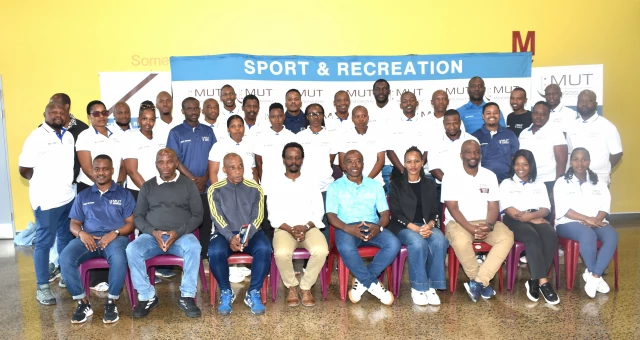
Highlighting its commitment to athletic excellence and brand elevation, the Mangosuthu University of Technology Department of Sport and Recreation hosted a comprehensive two-day onboarding programme for both new and returning sports coaches from 20–21 July 2026.
The event featured a lineup of high-profile industry names, a clear indication of the department’s resolve to provide its coaching staff with the tools needed for success. Prominent figures in attendance included seasoned sports administrator Ayanda Ndlovu and Thabo Dladla, one of South Africa’s most highly qualified football coaches, whose extensive international experience and deep tactical knowledge added significant weight to the sessions.
Addressing more than 30 coaches representing 16 distinct sporting codes at MUT, Deputy Director of Sport, Siyabulela Mkwalo, detailed the department’s core mission, expectations, and foundational values. “The core business is to maximise student participation and encourage sporting and recreation practice in harmony with and complementary to the academic character and values of the Institution,” Mkwalo emphasised. “All offered programmes ought to be structured in such a way that they facilitate and improve opportunities for students to acquire the necessary sporting skills to enable them to compete at various levels.”
Mkwalo made it clear that sports at MUT are intrinsically tied to the University’s future. The department’s ultimate objective is to produce well-rounded graduates capable of excelling both on the field and in their professional lives long after graduation.
Beyond tactics and strategy, Mkwalo placed heavy emphasis on the University’s corporate culture, reminding coaches of their responsibility as public ambassadors for the MUT brand. “Respect yourself. We need to respect each other, respect is critical. Please respect the students as well. Please respect the MUT brand. You are now an ambassador of MUT,” Mkwalo urged the cohort.
Closing the onboarding session, Mkwalo encouraged a culture of open communication and robust debate within the technical teams, highlighting that personal differences should never hinder collective progress. “We have different views, but we should not be enemies. We need to argue on principle,” he stated