
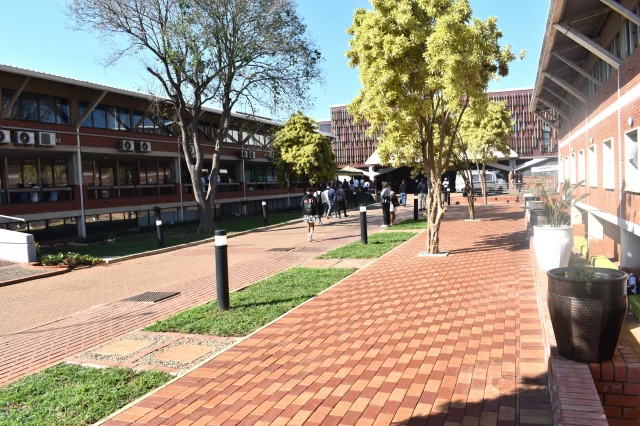
 There is something profoundly reassuring about arriving at a place that looks cared for. Well-maintained gardens, flourishing flower beds, healthy trees and inviting walkways communicate a message that words often cannot: people matter here.
Across Mangosuthu University of Technology, that message is becoming increasingly evident.
Visitors and members of the University community are greeted by a campus that is steadily reclaiming its ambience. Landscapes that once blended into the background are now drawing admiration. Perhaps nowhere is this renewal more symbolic than along Anniversary Lane. What was once simply a thoroughfare has evolved into a living expression of the University’s aspirations. The lane now tells a story of growth, purpose and hope through carefully selected indigenous trees, each representing one of the five strategic goals of the University’s IGNITE 2030 Vision.
The elegant Strelitzia reginae (Crane Flower/Isigude) symbolises learning, innovation and graduates taking flight into a future filled with possibility. The resilient Dovyalis caffra (Kei Apple/Umqolo) represents productivity, resilience and the enduring returns that come from sustained effort. The adaptable Cussonia spicata (Cabbage Tree/Umsenge) reflects creativity, knowledge generation and the University’s ability to thrive in a rapidly changing world. The majestic Strelitzia nicolai (Giant Wild Banana/Ikamanga) embodies visibility, growth and collaboration, reminding the University community that meaningful partnerships are essential to institutional success. Together, these living symbols transform the landscape into an outdoor narrative of the University’s vision.
Behind this visible transformation lies dedicated leadership and teamwork. The commitment shown by interim Deputy Vice-Chancellor Professor Bhekisipho Twala, together with Gugu Lushozi, Acting Director of Infrastructure and their teams, has gone far beyond routine campus maintenance. Their collective efforts have helped restore not only the physical beauty of the University but also its sense of identity. Every carefully maintained flower bed, every manicured lawn and every thriving indigenous plant contributes to an atmosphere that encourages learning, wellbeing and institutional pride.
Reflecting on the achievement, Professor Twala expressed his appreciation for the collective effort that made the transformation possible. “No meaningful transformation is ever the achievement of one individual. It is the product of people working together with a shared vision, where every contribution, no matter how small, strengthens the whole. When we collaborate with purpose, we create spaces that inspire excellence and reflect the pride we have in our institution.”