
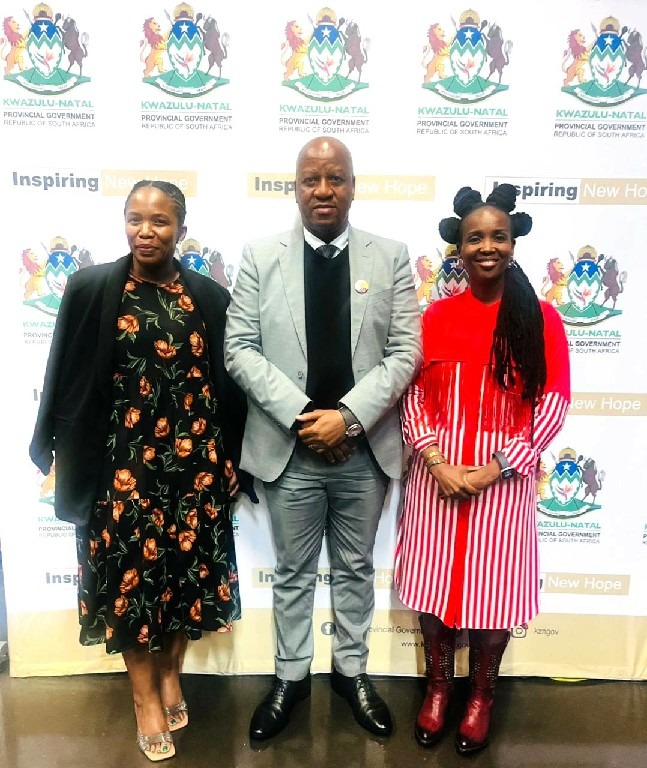
In response to the pressing challenges posed by climate change, KwaZulu-Natal Province is reaffirming its commitment to climate action as a fundamental pillar of its development agenda. Recent developments underscore this initiative, highlighted by a high-level workshop convened by the Honourable Thami Ntuli, Premier of KwaZulu-Natal. This workshop which took place on Saturday, 16 August aimed to craft a Practical Draft Action Plan for Climate Change in the province, focusing on inclusive and sustainable solutions.
A notable aspect of this gathering was the significant participation of members from MUT Women in Climate Change, who played a vital role in shaping the discussions. Their contributions emphasised the importance of women’s involvement in environmental sustainability and the creation of resilient communities. This perspective aligns harmoniously with the vision of Vice-Chancellor Professor Nokuthula Sibiya, a strong advocate for the Agenda 2063 commitment, which seeks to position women as keystones in achieving “the Africa We Want.”
During the workshop, representatives from Mangosuthu University of Technology (MUT), including Professor Xolile Mkhize and Dr Thobeka Makhathini, articulated the university’s endeavours to foster resilient food systems aimed at addressing hunger, while simultaneously promoting a future characterised by zero pollution and renewable energy. Their presentation illuminated the interconnectedness of these ambitious goals with the need for accelerated advocacy and inclusive collaboration, underscoring the pivotal role of women in these efforts.
Powerful case studies presented at the workshop illustrated local innovations and community-led initiatives in high-risk areas, offering valuable insights into strategies for reducing vulnerability to climate change. These examples not only demonstrated the capacity for impactful change but also reaffirmed the critical leadership roles that women assume in driving transformative climate actions.
The multidisciplinary approach showcased by MUT’s participants, combining Professor Mkhize’s expertise in Community Extension and Health Sciences with Dr. Makhathini’s background in Chemical Engineering, highlighted the necessity of diverse knowledge in crafting effective climate solutions. Their collaborative efforts exemplify how multifaceted engagement can lead to innovative and sustainable outcomes in the fight against climate change.
This workshop represents a significant stride forward in KwaZulu-Natal’s climate response initiatives. By placing women’s leadership and cross-sector expertise at the forefront of this agenda, the province is not only addressing immediate environmental challenges but is also paving the way for a more resilient and sustainable future for its communities and beyond.