
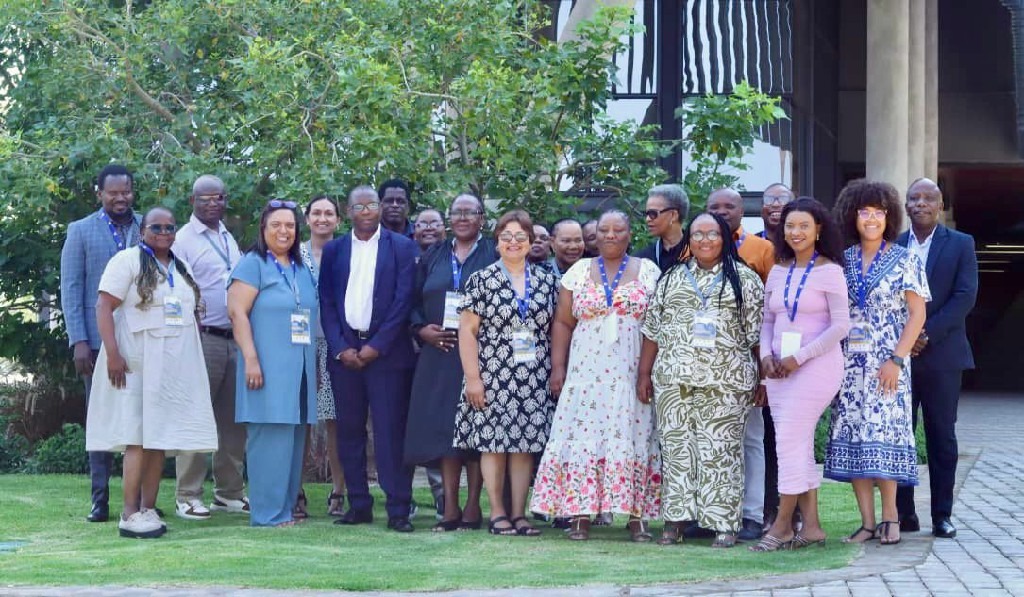
On 13 November, at its 6th meeting, the South African Historically Disadvantaged Institutions’ Alliance (SADHIA), announced the appointment of one of its members to a Vice-Chancellor position, marking a notable advancement in its executive leadership. The confirmation of Professor Nokuthula Winfred Kunene as Vice-Chancellor-designate of the University of Zululand was announced during a SADHIA meeting held this week at the University of Limpopo, attended by representatives from seven Historically Disadvantaged Institutions (HDIs). This assembly emphasised a significant leadership transformation within the alliance, as Professor Kunene, the current Deputy Vice-Chancellor for Research, Innovation and Engagements at the University of Zululand, is one of the founding members of SADHIA.
This development follows the earlier appointment of Professor Nokuthula Sibiya, another SADHIA founding member, as Vice-Chancellor of the Mangosuthu University of Technology (MUT) in 2024, occurring within a span of less than a year. The trend of deputy vice-chancellors of research and innovation advancing to top executive roles within higher education institutions highlights the critical role DVCs of Research and Innovation play in shaping research trajectories, institutional strategies, and national higher education policies. This pattern is further exemplified by SADHIA Chairperson Professor José Frantz, who, while currently serving as DVC for Research and Innovation at the University of the Western Cape, will soon assume a similar role at Sol Plaatje University. Earlier this year, Professor Nosisi Feza took on a leadership position focused on research and innovation at Walter Sisulu University, having transitioned from the University of Venda.
These appointments signify the vital contributions of these leaders to the establishment and advancement of SADHIA’s overarching mission to foster research and development and equity within HDIs. Professor Frantz articulated the significance of the alliance, stating, “Our association has been instrumental in helping us address the persistent disparities that HDIs face, especially around resource allocation.” She expressed satisfaction with the collaborative efforts that led to robust proposals for the NRF South African Research Chairs Initiative (SARChI), with early indications suggesting that several SADHIA institutions performed commendably, although the formal outcomes have yet to be announced.
Furthermore, the meeting resolved that founding deputy vice-chancellors who transition into vice-chancellorships or new positions at other institutions will retain their affiliation with SADHIA as honorary members. This decision was influenced by the recognition of their expertise, institutional memory, and strategic insights, which remain imperative for the alliance’s sustained evolution.
Representing Mangosuthu University of Technology at the meeting, interim DVC Dr Anette Mienie was supported by MarComms’ Mbali Mkhize and Zama Sishi, and by Nozipho Mnguni, the UCDG and Ethics Coordinator in the Research Directorate. As SADHIA continues to expand its leadership footprint within the national higher education landscape, these developments represent a significant stride towards addressing historical inequities in funding and research opportunities for institutions previously marginalised in the higher education sector.