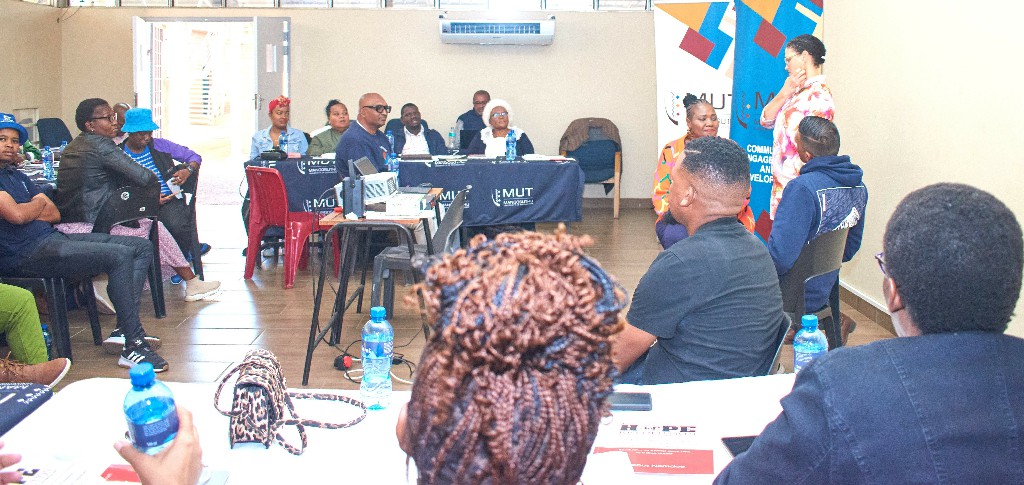
On 10 and 11 July the CEAD directorate, in collaboration with the Nelson Mandela University (NMU), and Hope Revolution Foundation that is based in Cape Town, but working with NMU, organised a highly engaged short learning programme (SLP) training workshop for 22 diverse NPOs, Department of Education (DoE), churches, and Umlazi Township’s Ward 89 ward committee member, and committee members from Verulam, north of Durban, at the MUT premises. The workshop was part of a substance abuse project launched over the two days. Professor Nkonki-Mandleni said that one of the key outcomes of the training was that trainees did not need elaborate systems with large staff complements and vast sums of money to start programmes drawing communities out of substance abuse, but rather needed passion, commitment, and an attitude to “start now with what we have.” At the end of the two days, all partners wanted to strive to reclaim “our sons and daughters” as alluded by Reverend Jacobus Nomdoe, the founder of the Hope Revolution Foundation. The training helped establish a network across various organisations for support. Mangosuthu University of Technology was identified as the site for all the organisations in the future.
During the workshop, some of the participants gave testimony on how their families are being affected by some members of their families who are abusing substances. What was central to their messages was that the families were in great pain and needed help urgently. The facilitators made it clear that the suffering families had the power to change the dire situation they were facing.
Professor Busisiwe Nkonki-Mandleni, the Director of CEAD, indicated that the project talked to the University’s Strategy goal 3: excellence in community engagement, and MUT’s efforts towards nation building, as alluded to in the MUT Strategic goal 4. The facilitators were Professor Venoma Goliath from NMU, Dr Bruce Damons, Director of the Engagement Office at NMU, and Dr./Reverend Nomdoe.
The collaboration between organisations was facilitated by the SLP’s hubs of convergence (HoCs) approach to community engagement. Professor Nkonki-Mandleni stated that HoCs are viewed as centres where universities and communities come together to co-create new knowledge, addressing social challenges. The approach is expected to lead to increasingly sustainable, reciprocal, impactful, and responsive relationships between MUT and its stakeholder communities.
The CEAD Directorate will monitor progress and evaluate the impact made by various organisations in their efforts to address substance abuse in the communities they serve.