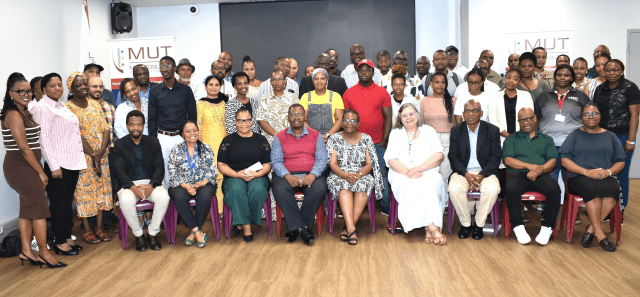
In a bold move to enhance its academic standing, Mangosuthu University of Technology (MUT) has unveiled a comprehensive suite of initiatives to elevate its research output and aim for a top-10 university ranking within the next few years. Interim Vice-Chancellor and Principal, Professor Rushiella Songca, delivered a compelling address on April 14, 2026, outlining her vision to transform MUT into a research powerhouse.
Professor Songca, drawing from her successful tenure at a higher-ranked institution, emphasised the critical role of research in rejuvenating the university’s reputation. “Our aim is to move MUT from the bottom into the top 15, and eventually, the top 10. We need to be in the top 10 in the next few years,” she asserted, highlighting the urgency and ambition of her goals.
Central to Professor Songca’s strategy is fostering a culture of research among academic staff. She called for universal participation in research activities, encouraging faculty members to present at conferences annually. “Everyone must do research. Research is about your pride. We are going to have excellence in research; we will give you all the support you need, but tell us what you need,” she stated.
Key commitments detailed in her address include dedicated support and monitoring systems for research activities, aimed at enhancing contributions from both academic and support staff. Deans will be tasked with overseeing progress and outcomes in their respective departments. In addition, the university will focus on facilitating postgraduate progression, providing targeted support for faculty with master’s degrees to pursue PhDs and become effective doctoral supervisors.
Financial backing for research is also set to increase, with a commitment of R2 million allocated to support research initiatives, particularly for first-time researchers. Professor Songca emphasised the importance of transparent funding processes and collaboration within the university.
Furthermore, plans are in place to launch a multidisciplinary research journal, targeting accreditation within three years, and hosting a multidisciplinary conference next year. An initiative called “MUT in Research” will encourage researchers to lead new projects and propose conference and journal names.
Professor Songca also addressed equity in academia, stressing the necessity of fostering an environment where women can thrive in research and developing strategies to increase the number of doctoral candidates and professors through supportive measures rather than dismissals.
Responses from faculty and staff reflected strong backing for the new initiatives. Dr Nkosinathi Madondo from the Learning and Teaching Development Centre described Professor Songca’s address as “a great opportunity,” urging expansion of postgraduate programmes so researchers can supervise doctoral candidates.
Meanwhile, Dr Joseph Bwapwa, a Civil Engineering lecturer, emotionally appealed for a reduction in teaching loads and the appointment of more postdoctoral fellows, warning that MUT continues to lose PhD staff and recommending joint programmes with other universities of technology to address supervision shortages.
Professor Roger Coopoosamy, Head of the Department of Nature Conservation, acknowledged existing infrastructure challenges but expressed optimism, noting that the faculty’s research output has doubled, marking significant progress in the university’s journey toward its ambitious goals.
The engagement, a two-way process, was a huge success, as people also made contributions and sought clarity where required.