
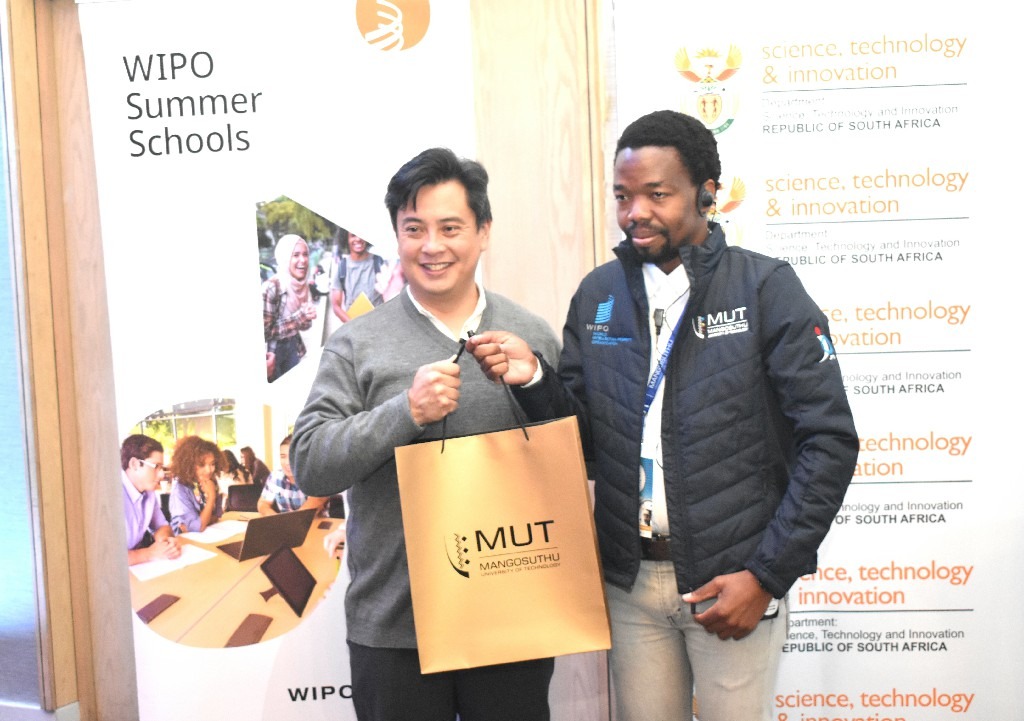
Mangosuthu University of Technology (MUT) is hosting the 17th World Intellectual Property Organisation (WIPO) South Africa Summer School on Intellectual Property (IP) and Transfer of Technology, from 24 November to 5 December 2025 off campus. This flagship international programme brings together students, young professionals, researchers, and practitioners from South Africa and beyond to deepen their understanding of the strategic role of intellectual property in innovation, economic development, and societal advancement. Delegates are from many parts of the globe, including Belgium, Botswana, Nigeria, Namibia, Uganda, Kenya, Tanzania, Republic of Korea (South Korea), Zambia, Rwanda, Cameroon, Zimbabwe, Dubai, India, Ethiopia, and of course, different parts of South Africa, descended upon Durban not only to listen to speeches from experts from government, the public sector, and the non-governmental sector, but make up their minds, and decide what role they would be playing after the event. Among the esteemed speakers that made presentations at event are Maria-Stella Ntamark, Programme Officer at WIPO, Belgium; Jetane Charsley, head of the National Intellectual Property Management Office (NIPMO); and Advocate Rory Voller, a Cabinet appointed Commissioner of the Companies and Intellectual Property Commission (CIPC).
Dr Mandla Hlongwane, Deputy Director: Technology Transfer in the Research directorate, said that hosting the Summer School marks an important milestone for MUT as it continues to position itself as a leading institution in applied research, innovation and technology development. Dr Hlongwane said that the programme they put together offers participants an exceptional opportunity to engage with global experts, learn from real-world case studies, and acquire practical skills related to IP protection, commercialisation pathways, and the management of knowledge assets within diverse sectors.
The initiative highlights the increasing importance of intellectual property education in today’s knowledge-driven and technology-intensive economy. Dr Hlongwane explained the role of IP in the large economy: “The IP systems, encompassing patents, copyrights, trademarks, industrial designs, trade secrets, and related rights that serve as powerful tools for stimulating creativity, attracting investment in research and development, and enabling the successful commercialization of new technologies. By safeguarding original ideas and facilitating fair competition, IP frameworks play a decisive role in boosting economic growth, enhancing national competitiveness, and promoting long-term sustainability.”
Within the University setting, strengthening IP literacy is particularly essential, said Dr Hlongwane. “As institutions like MUT expand their research activities and innovation outputs, the need to bridge the gap between laboratory discoveries and market-ready solutions becomes increasingly urgent,” Dr Hlongwane said. Adding that the knowledge of IP and technology transfer processes empowers students, researchers, and innovators to protect their inventions, form industry partnerships, negotiate licensing agreements, and explore entrepreneurship through spin-off formation. “This ensures that scientific breakthroughs do not remain confined to academic journals or laboratories, but are transformed into products, services, start-ups, and technologies that directly benefit society,” he said.