
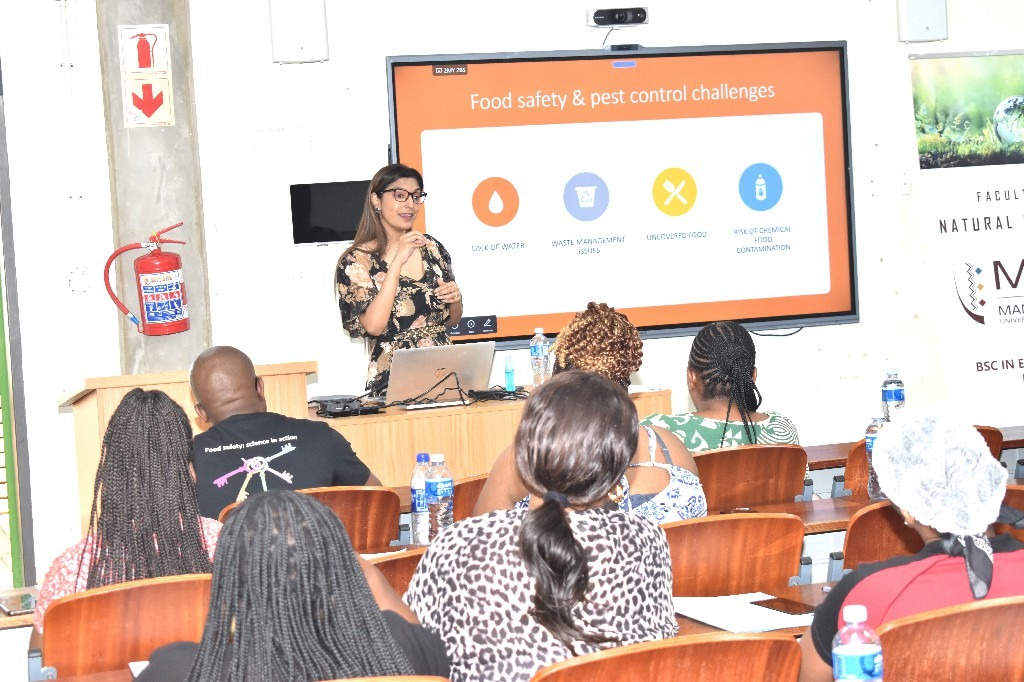
Two members of the University staff have dedicated their professional skills to benefit local informal traders. Dr Mpou Manyatsa and Dr Trishka Pillay, both lecturers in the Department of Environmental Health, together with the University’s Safe, Health and Wellness practitioner, Lizwi Masondo, partnered with the Small Business Support team and eThekwini Municipality’s Environmental Health division, to deliver specialised training for ready-to-eat informal food traders and registered caterers.
The initiative, undertaken as part of a registered MUT CEAD project, aimed to equip food traders with essential knowledge on food safety and pest management. Dr Manyatsa said that the topics included business registration requirements, compliance and certification processes under Regulation 638, the World Health Organisation’s Five Keys to Safer Food, and best practices for effective pest control. The training also highlighted the dangers of pesticide misuse, with a strong focus on preventing poisoning of people, and ensuring the safe handling of chemicals in food environments. All participants received certificates of attendance in recognition of their commitment to improving food safety standards.
Dr Pillay highlighted the importance of training for the informal food traders. Follow-up sessions will be done by the project team to ensure adherence to guidelines.
The food traders were from in and around Umlazi Township and Isipingo. They appreciated the knowledge they had gained from the MUT and eThekwini Municipality staff. Ayanda Nosipho Ntshangase from V Section, Umlazi Township, runs a fast-food shop named Lunchbox Café. Her business is in Umlazi V Business Hive. Ntshangase was one of the 19 food traders that attended the training. Here are her comments after the training: “I am truly grateful for such opportunity; I learnt so much about food safety and looking forward to applying all that I have learnt to my business and workplace. It is a great pleasure to attend programmes like these, because they help us understand the importance of food safety and help us grow,” Ntshangase said.