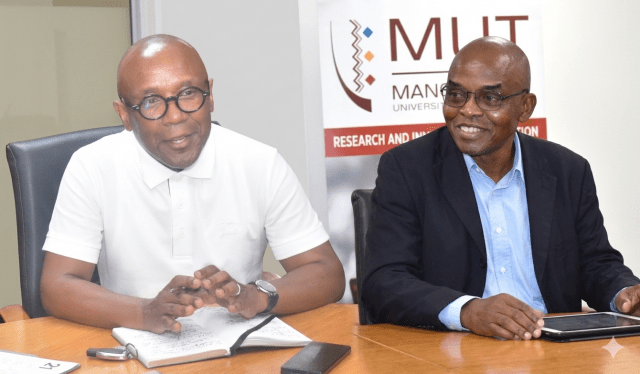
In a significant move to elevate engineering education and industry readiness, the Mangosuthu University of Technology (MUT) Faculty of Engineering hosted a high-level roundtable with the Engineering Council of South Africa (ECSA) and key industry stakeholders on 24 April 2026. The meeting focused on strengthening strategic alignment across several critical areas, which included programme accreditation, infrastructure development, curriculum relevance, and robust industry integration.
Dr Richard Chidzonga, Dean of the Faculty of Engineering, noted that the comprehensive discussions evaluated the faculty’s current strengths, risks, and opportunities. The talks also addressed ECSA’s national priorities, the performance of MUT’s Department of Co-operative Education, specifically regarding work-integrated learning (WIL) placements, and the University’s ongoing infrastructure capacity challenges.
A central theme of the roundtable was ECSA’s vital advisory role. ECSA President and MUT alumnus, Thembinkosi Madikane, outlined the Council’s national mandate to uphold the integrity of the Engineering profession. “Our mandate is to set standards and accredit programmes. We can come to MUT and do a presentation before we accredit you,” Madikane explained. He stressed the importance of staff professionalisation, noting that lecturing staff teaching at exit levels must be registered with ECSA.
To facilitate this process, Madikane announced that ECSA offers dedicated “Engineering Clinics” to assist academic personnel. “ECSA can come and address staff who are ready to be registered. There is a lot that ECSA does on a national scale,” he said. Madikane emphasised that these clinics are designed to ensure compliance and prevent academic programmes from being withdrawn, pleading with the faculty to “please bring the right individual when we are running a clinic.”
Following the collaborative discussions, Dr Chidzonga announced a series of strategic resolutions adopted during the meeting. The key decisions include establishing structured collaborations for infrastructure advisory, curriculum development, and research partnerships; strengthening advisory committees by integrating ECSA and Industry Advisory Boards (IABs); enhancing WIL placement strategies to mitigate current student placement shortfalls; promoting honorary and adjunct appointments to bolster academic capacity; supporting staff development and addressing operational challenges, including staffing and project management capacity; and institutionalising the ECSA–Industry–MUT Engineering Seminar as an annual event.
Beyond academic and professional development, the roundtable also discussed pressing physical infrastructure issues. Dr Chidzonga revealed that the Office of the Executive Technical Director in the eThekwini Municipality will spearhead a consultative process with MUT to resolve the University’s long-standing water supply challenges.
Reflecting on the broader impact of these resolutions, Dr Chidzonga expressed optimism for the future of the Faculty of Engineering. “The decisions will improve accreditation readiness, strengthen industry alignment, and enhance graduate employability,” Dr Chidzonga stated. “The infrastructure and water discussions emphasised sustainable solutions and technical support, improving long-term planning and compliance. The need for professionalisation of staff through compliance with Identification of Engineering Work regulations also came into focus, further advancing MUT’s strategic goals.”