
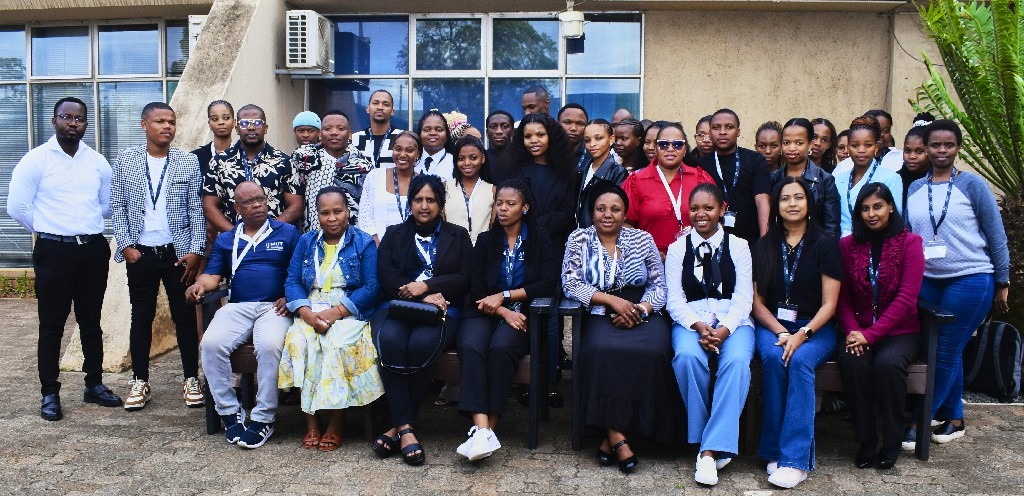
The Department of Biomedical Sciences, on 17 November 2025, hosted its annual Work Integrated Learning (WIL) Student Presentation Day, a capstone event celebrating the professional growth and academic achievements of its third-year students. The annual event is a forerunner of the research that the students will conduct in future. It is meant to introduce them to research principles at that level and how to present research findings. Senior Lecturer in the department, Rajendrie Govender, said the WIL programme is designed to bridge the gap between theory and practice, allowing students to integrate their university-acquired knowledge with the hands-on realities of a professional laboratory environment. “A key objective is to immerse students in the culture, expectations, and conduct of a practising laboratory professional,” said Govender.
The Presentation Day was the culmination of an “intensive period” during which the students do a comprehensive six-month rotation within the department’s partner network of private and National Health Laboratory Service (NHLS) accredited teaching laboratories.
A significant component of their work was the development of a detailed case study. Students compiled laboratory findings on clinical diseases and microorganisms, exploring diagnostic pathways across at least three disciplines: Clinical Pathology, Virology, Cytology, Histology, and Immunohematology.
During the presentations, the students delivered their findings to an audience of peers, academics, and industry stakeholders. A panel of expert judges, representing the various disciplines from the department’s training laboratories, assessed the presentations.
“Over and above highlighting the students’ hard work and dedication, the event also reinforced the strong partnerships between the University and the diagnostic pathology sector, ensuring that the department’s graduates are industry-ready,” said Govender.
One of the students who made presentations was Nosipho Dlamini. Her research topic was: Investigating the level of knowledge, motivators and barriers to blood donation among potential donors: A case study of students at Mangosuthu University of Technology. Dlamini said such a study has never been done at MUT. “The aim of my study is to understand why students at Mangosuthu University of Technology are not donating blood. What is their level of knowledge about blood donation, and what is stopping them from donating blood? said Dlamini. Dlamini did her Work-Integrated Learning at Inkosi Albert Luthuli Hospital.