
One of the reasons for having the Scholarship of Engagement Conference that was organised by the University’s CEAD, and took place in Durban from 18 to 20 November 2025, was to bring to the fore the importance of this scholarship, and that it should be an interaction between the university staff to goes out to meet the communities and collect data, or meet them for any other reason, should be structured such that everyone becomes a winner. It should be a relationship grounded in respect for communities for who they are, what they bring to the table, and their history. The conference guest speaker, Professor Joseph Francis, could not have put it better when he used the baobab tree as a symbol of what is right and honest about what should happen between academics and communities. Professor Francis’s advice stemmed from the fact that something is amiss in how academics engage with communities; hence, the topic of his speech: Closing the Knowledge Gap: Harnessing the Scholarship of Engagement as a Strategic Vehicle for Inclusive Community Empowerment.
However, not all is gloom about how academics work with communities. Professor Francis himself said so when he told the attendees that his University of Venda has put the Scholarship of Engagement at the centre. His speech strongly implied that every other higher education institution could consider following suit. Professor Busisiwe Nkonki-Mandleni, Director of the CEAD, said one of the benefits of the conference was that it would reinforce their efforts to bring community engagement into the centre as part of teaching and learning, and research.
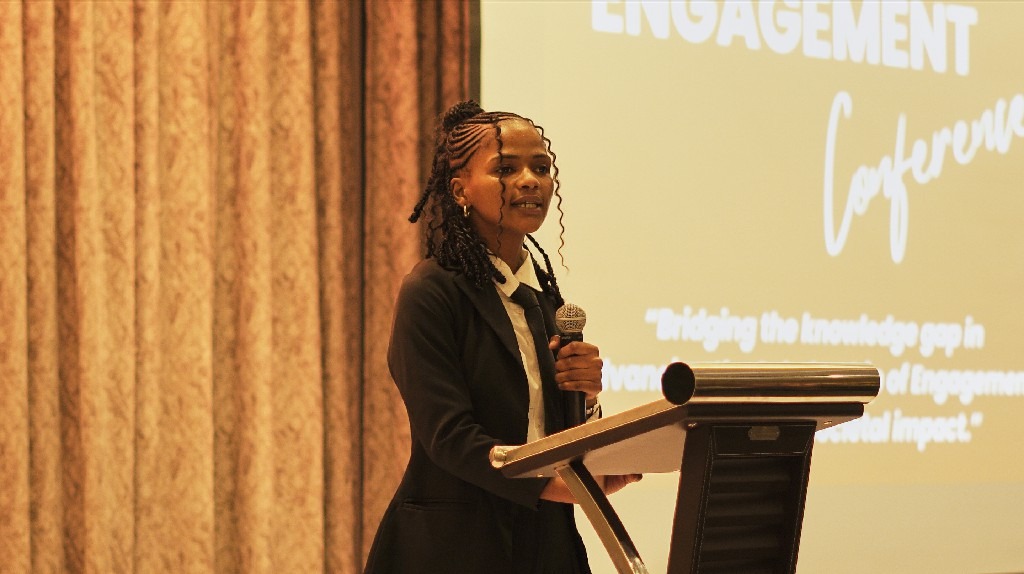
For it what it should be – commitment to the course, Professor Francis would be very happy to know that MUT is not only encouraging staff to work with communities, but also students. CEAD is encouraging students to volunteer to help communities. One of the students who continues to make a mark in this area is final-year Accounting student Nofezile Jali. Jali addressed delegates at the conference’s gala dinner.
Jali told the delegates that beyond her studies, she serves as a CEAD peer helper and gets involved in mental health awareness and broader community outreach programmes. “I am a proud recipient of the first prize, best student volunteer award,” Jali said.
Jali said a lot in her speech. But here is the bigger story about her and what the CEAD is doing. Jali is one of the pioneers in a journey that few South Africans have travelled, yet this journey is the most needed in human life, giving one’s time to help those in need. The CEAD, working with other divisions like Student Affairs, is bent on inculcating the philosophy of getting involved in community issues as a helper, a listener, a doer, and a servant, before you are a data gatherer, as is usually the case. All that Jali said is resting on this. This is what guides Dr Mfanozelwe Shozi, CEAD’s Deputy Director, when he takes the students to communities to volunteer. This is a hard job in a country where volunteerism is a strange act; everyone expects to be paid for the little that they do. Jali seems to have mastered this art early in her young life. Her positive view of life suggests she is focusing on what she can, not being aware of some hard realities, which is good, hence her comment: I believe that in South Africa, volunteering is not a foreign language, it is a language that we have always known, one that is spoken through kindness and the quiet power of compassion. We call it “Ubuntu”.
Now the challenge for the whole University, and all those who heard Jali delivering her speech, is to create more Jali’s, and use the guidelines that speakers like Professor Francis gave at the conference.