A cohort of 34 Mangosuthu University of Technology staff members recently completed an intensive three-day Research Writing Retreat to sharpen their academic publishing skills. Held from 6 to 8 July 2026, the retreat featured invaluable insights, practical frameworks, and one-on-one mentorship from three leading academic experts.
Emeritus Professor Azwidohwi Kutame from the University of Venda led staff through the rigorous paces of structuring a high-impact research paper. Using the sample title, “Factors Influencing Research Productivity Among Early Career Academics at South African Universities,” Professor Kutame deconstructed the anatomy of strong academic writing. “A good title should be clear and concise, reflect the main variables or phenomenon, identify the study population or context where appropriate, and avoid unnecessary words and abbreviations,” Professor Kutame emphasised.
Beyond crafting the narrative, Professor Kutame urged researchers to make strategic, informed decisions long before they submit their work. Key advice included study journal guidelines. “Carefully review and strictly adhere to the specific publishing criteria of target journals. Also spot predatory journals by checking the journal’s history. A long, established history usually signals authenticity and impact, whereas a shorter history might require closer scrutiny.”
Professor Kutame also emphasised the need to verify the journal’s eligibility for the subsidy. “To avoid predatory publishers, South African researchers should utilise official databases,” he said. Professor Kutame recommended checking the CREST database to ensure a journal is officially marked as “eligible for subsidy.”
Before hitting submit, Professor Kutame advised researchers to run through a strict final checklist: ‘Does the title accurately reflect the study? Does the abstract summarise the entire study? Does the introduction clearly present the problem? And does the theoretical framework firmly support the study?’, among others.
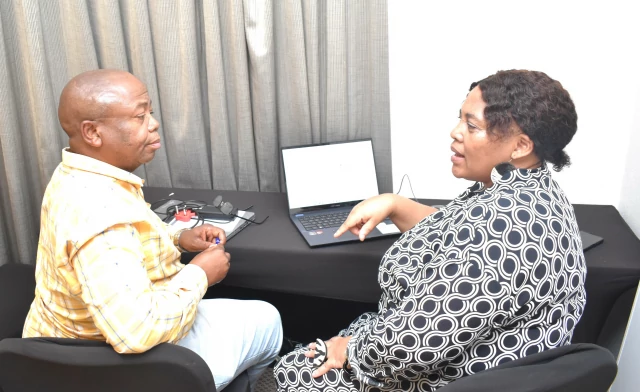
The retreat also provided hands-on, practical support to help attendees transition from theory to publication. Professor Nontobeko Khumalo, from the University of South Africa’s (UNISA) Curriculum and Instruction Studies Department (College of Education), conducted one-on-one consultation sessions. She worked individually with staff members, guiding them through the specific nuances of their upcoming papers and refining their manuscripts for submission.
Complementing the technical guidelines, MUT’s own Dr Khulekani Gazu from the Department of Communication delivered a foundational lecture on the core philosophy of academic writing. He challenged his colleagues to deeply consider the fundamental intent behind their work.
“Some pertinent questions are: What discipline or field is your paper for? What is the primary purpose of your writing? Is it an argumentative essay, a research proposal, or a literature review?” Dr Gazu noted.
The three-day retreat concluded with staff equipped not only with refined manuscripts but also with a robust framework for navigating the complex world of academic publishing, ensuring that MUT’s research output continues to grow in both quality and global relevance.