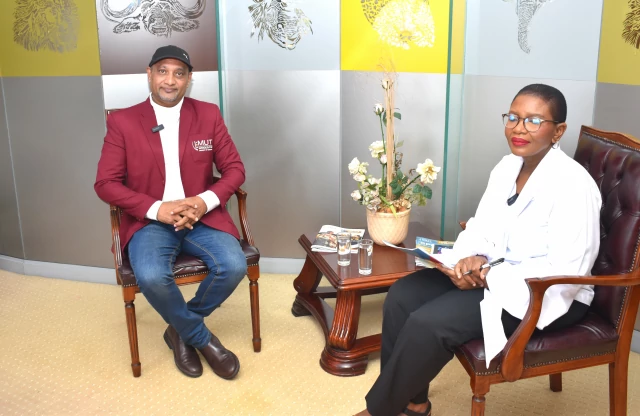
Delivering on a promise made a commitment she made to MUT researchers, MUT Interim Vice-Chancellor and Principal, Professor Rushiella Songca, has officially launched a new flagship Research Impact Vlog Series. The high-profile project launched on 18 June 2026, marking a key milestone within the University’s overarching Vision 2030 Strategic Plan. Described by Professor Songca as “one of the exciting initiatives emerging from engagements with researchers,” the vlog series features a collection of high-level interviews with top scholars across all MUT faculties.
The primary goal of the initiative is to bridge the gap between complex academic research and everyday society. By making academic work more visible, accessible, and understandable to a broader audience, the vlogs highlight how MUT research solves real-world challenges, drives innovation, influences policy, and directly improves human lives.
Beyond public visibility, Professor Songca emphasised that the project serves several deep institutional purposes. It is designed to strengthen opportunities for academic collaboration, back future funding and grant applications, inspire emerging researchers, and reinforce MUT’s standing as an Institution dedicated to generating and sharing vital knowledge.
The vlog series kicked off with exclusive interviews featuring three of the Institution’s prominent, highly-rated researchers. First to take the stage was multi-award-winning, C-rated researcher and Head of the Department of Nature Conservation, Professor Roger Coopoosamy, who has been with MUT since 2010. A specialist in phytomedicines, indigenous knowledge systems (IKS), medicinal plants, and environmental sustainability, Professor Coopoosamy shared insights from his extensive national and international networks. A key highlight of his discussion with Professor Songca was his team’s close work with traditional healers in and around Umlazi Township. Professor Coopoosamy described the partnership as a clear win-win situation. “The traditional healers have a lot of knowledge; we don’t approach them as people who know better; we learn from them,” Professor Coopoosamy noted. He added that, together with his team, they also actively assist local traditional healers in interpreting complex government policies that affect their practice.
Professor Songca next spoke with Professor Papy Numbi, the Head of the Department of Electrical Engineering. As a rated researcher, Professor Numbi used his session to break down his work regarding Energy Systems Optimisation, a critical field of study amid modern energy challenges.
Concluding the first day’s line-up, Dr Kavita Behara, also from the Electrical Engineering department, was third in the queue. Dr Behara talked about ‘Exploring the Application of Artificial Intelligence in the Diagnosis and Management of Chronic Infectious and Non-Infectious Diseases.
The Interim Vice-Chancellor and Principal continued recording interviews the following day, with the comprehensive series scheduled to wrap up on 25 June 2026.
The featured researchers routinely publish their peer-reviewed findings in highly recommended, top-tier academic journals, including those specifically recognised and vetted by the Department of Higher Education and Training (DHET), ensuring MUT’s localised research meets global standards of excellence.