
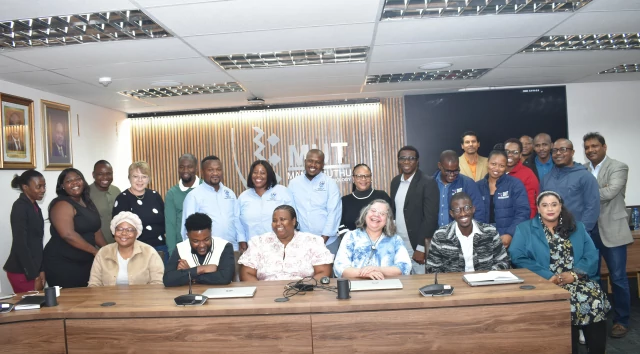
Mangosuthu University of Technology (MUT) on 14 May 2026, on main campus, hosted a major provincial research funding workshop targeted at radically expanding participation in South Africa’s premier biodiversity grant system. The event was convened in response to a strategic directive from the National Research Foundation (NRF) to widen awareness and strengthen the footprint of the Foundational Biodiversity Information Programme (FBIP), particularly among Historically Disadvantaged Institutions (HDIs). Recognising MUT as a crucial institution in this sector, the NRF tasked the University with leading a collaborative regional platform.
The workshop brought together academic representatives from all four public universities in KwaZulu-Natal: MUT, the Durban University of Technology (DUT), the University of KwaZulu-Natal (UKZN), and the University of Zululand (UNIZULU).
According to Mthobeli Myeza, the NRF and Pre-Grants Administrator within MUT’s Research Directorate, the institutions joined forces with the collective goal of advancing the generation, management, and dissemination of critical biodiversity data. “A particular emphasis was placed on engaging Historically Disadvantaged Institutions (HDIs), ensuring that their researchers are empowered to access funding opportunities, and contribute meaningfully to the national biodiversity knowledge base,” Myeza explained.
By aggressively strengthening HDI participation, the NRF aims to accomplish two main goals, to increase the baseline number of grant applications submitted by these universities; and to boost the success rate and proportion of active funding awards allocated to them.
The workshop attracted approximately 35 specialised staff and researchers from across the four regional sister universities. Academic execution was led by Professor Emma Steenkampand from the University of Pretoria and Professor Caswell Munyai from the University of KwaZulu-Natal.
The primary curriculum centred on practical application strategies, moving past theoretical concepts to focus strictly on what makes an empirical grant proposal succeed. NRF representatives on-site emphasized that modern biodiversity proposals must be meticulously engineered to align with wider national development goals and environmental protection frameworks. The funding body’s leadership delivered essential, hands-on masterclasses covering compliance rules, strict grant management structures, and advanced strategies to maximize the competitive edge of upcoming submissions.