The Committee for South African Solidarity, based in Berkeley, San Francisco Bay Area, U.S., has announced that the Mangosuthu University of Technology (MUT), its partner, will play a central role in its upcoming Day of Solidarity on 25 April 2026. The Institution has been selected in recognition of its significant contributions to COSAS programmes over the past year.
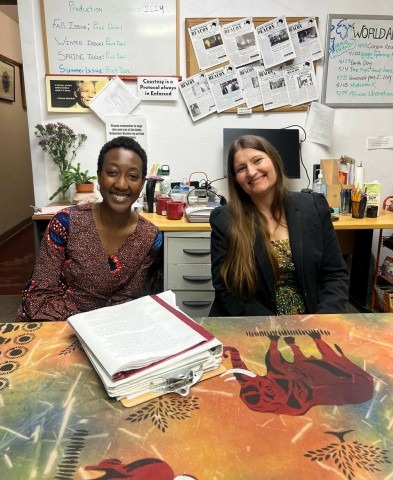
As part of the preparations, Dr Mfanozelwe Shozi, Deputy Director: CEAD at MUT, participated in a recorded interview facilitated by COSAS Administrative Assistant Tsarina Secyugu and Chiedu Ufoegbune. The discussion explored MUT’s impact on students and the surrounding community, as well as its broader social mission.
Having grown up in a rural area, Dr Shozi said he was drawn to MUT because it primarily serves students from rural communities, townships, and informal settlements. He emphasised his commitment to addressing socio-economic inequalities and empowering disadvantaged communities through education.
Highlighting MUT’s historical significance, Dr Shozi described the University as a key institution in South Africa’s transformation, particularly as a technology university located within a township. He linked its mission to the ideals of the Freedom Charter, especially its call for “the doors of learning and culture to be opened.”
According to Dr Shozi, MUT actively fulfils this vision by recruiting students from disadvantaged backgrounds, many of whom are first-generation university attendees, and by offering qualifications in Science, Technology, Engineering and Mathematics (STEM). These fields were historically inaccessible to Black South Africans under apartheid due to the limitations imposed by the Bantu Education system.
Dr Shozi also acknowledged the legacy of Prince Mangosuthu Buthelezi, who established the Institution as part of a broader effort to train and employ skilled technicians in South Africa.
A major theme of the interview was the importance of volunteerism in building resilient communities. Dr Shozi stressed that partnerships with organisations like COSAS strengthen both local and international collaboration, amplify community voices, and support resource-sharing initiatives. He pointed to strategies such as community meetings, student-led programmes, and partnerships with civic organisations as key to addressing pressing social challenges. He also highlighted the need for responsible social media use to keep communities informed without causing fatigue.
MUT’s collaboration with COSAS has already yielded tangible results. The University has helped identify schools eligible to receive learning materials, with deliveries expected later this year. Additionally, COSAS has hosted two masterclasses within the MUT community, focusing on volunteerism and encouraging staff and students to register as volunteers.
Dr Shozi underscored the importance of international awareness and support. He called on citizens of the United States to recognise both the progress and the challenges facing South Africa, urging them to contribute to efforts of material solidarity.
The upcoming Solidarity Day is expected to highlight these collaborative efforts and further strengthen ties between COSAS, MUT, and the communities they serve.