
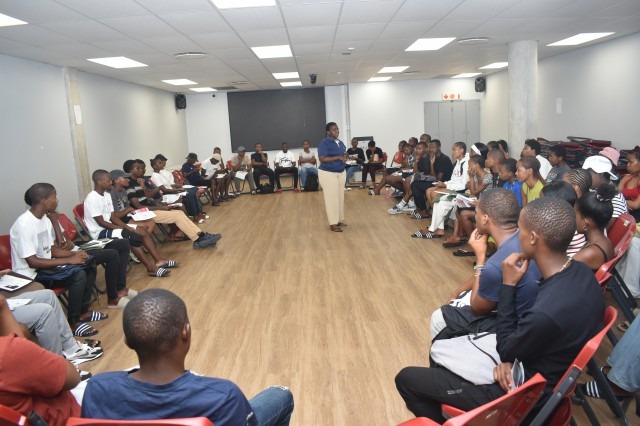
MUT, like others worldwide, is commemorating Teen Suicide Week, which ran from 8 February 2026 to 14 February 2026. The theme for this year is: “Your Feelings Matter, Let’s Talk; addressing bullying, fostering supportive environments at home and school, and creating psychologically safe spaces”.
During the three-day dialogue session that started on 11 February 2026, Velisiwe Ngema, a Campus Care Worker from Higher Health, based in the Student Affairs’ Counselling Unit, primarily interacted with first-year students who expressed interest in the subject. The students responded with constructive messages. Ngema said the students’ “views and responses regarding suicide were very encouraging and insightful. They were open and willing to share their thoughts”. For instance, one stated that you should not compare yourself to others from well-off families. You need to accept what your parents can afford to give you. Ngema said: “There is still a significant amount of work that needs to be done. Most participants were first-year students, many of whom are still adjusting to the university environment. This highlights the need for ongoing education around mental health, suicide prevention, and available support services”.
During the sessions, Ngema asked the students about the reasons leading to suicidal thoughts and feelings. The reasons the students gave were about mental health, and not knowing what to do when they have problems. The sources of the problems were extrinsic and, at first glance, appeared insurmountable to the students. The students said some of them commit suicide because of anxiety, stress, depression, bullying, financial problems, and many other reasons. Ngema herself gave some of the reasons. “The people who are suicidal are short-tempered. They isolate themselves. If you see a friend with cutting marks, ask them what their problems are. You will regret it when you find out they are dead, when you could have helped them”, Ngema said.
Highlighting the need to remain vigilant and take responsibility, Ngema told the students that “it is possible to recognise when someone has a problem. For instance, when your roommate shows some changes, such as no longer doing what they used to do. It is better for you to find out. Your roommate may open up to you about their problems. Having a great support system is a way to go.”
Ngema further told the first-year students that at MUT, when they need help, they can go to Student Counselling, which is located at the Students’ Centre. “Student Counselling has several services, like mental health support, peer helpers, who are your age. Peer helpers then report to the counselors.