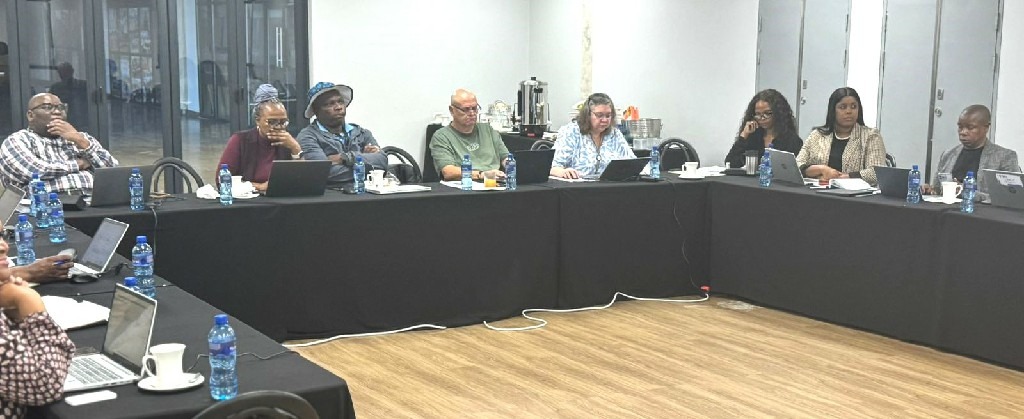
Generally, it is crucial to provide accurate information when reporting. In the higher education sector, this obligation becomes even more important. Being aware of this fact, the University’s Directorate of Institutional Planning and Research (DIPR) invited leaders from faculties and support divisions to come and discuss reporting with the directorate. The Strategic M&E Workshop happened on the main, on 26 August 2025. It reflected on strengthening performance, reporting, and institutional effectiveness.
Opening the event, Dr Bheka Ntshangase, Acting Deputy Vice-Chancellor: Resources and Planning, affirmed on behalf of the Vice-Chancellor and Principal, Professor Nokuthula Sibiya, that ‘monitoring and evaluation (M&E) systems were arriving at the right time, just as when the new strategy is about to be born, setting an optimistic and urgent tone for building robust systems to drive MUT’s 2026–2030 ambitions.
Proposed by the Monitoring, Evaluation & Reporting (MER) Office within the DIPR, under the leadership of Ayanda Nongogo, the workshop served as a precursor to Annual Performance Plan (APP) planning, equipping executives with a shared Monitoring and Evaluation (M&E) approach. Acting Senior: DIPR, Dr Liile Lekena-Bayaga, integrated the M&E into the broader strategic planning calendar.
In her opening, Dr Lekena-Bayaga, Acting Senior Director: DIPR, invoked the Council-approved Strategic Planning Governance Framework (September 2024) under the theme Reclaiming Vision Through Strategic Planning, Dr Lekena-Bayaga stressed that institutional planning must remain dynamic, with the APP guiding the vision in real time and requiring divisional consultation and accountability: “Planning is dynamic; while the five-year strategy sets the vision, the APP takes precedence as the most current and responsive instrument. Targets can be revised at the annual Lekgotla, but this requires accountability. Officers must consult their constituencies beforehand and come with a divisional mandate, not individual views. In this way, we build a living vision, responsive objectives, and a system-wide culture of alignment,” said Dr Lekena-Bayaga.
In launching a new M&E journey, Nongogo, Director of MER, introduced a new initiative that DIPR is proposing to MUT management. Nongogo presented the proposed MUT M&E framework concept, emphasising that this was a work in progress, and that the workshop was intentionally designed to begin at the executive level: “You are actually the first executives we are engaging because we would like your wisdom first in crafting and shaping what we are setting up for our context. Context matters because in every university, things are done differently. It is worth going with what works for your environment, your dynamics, your situation,” said Nongogo. Drawing from her experience as former Deputy Director: Management Information, Nongogo explained that the theory of change logic is a valuable methodology being adopted to define a structured approach to strengthening activity planning. This foundation is essential for enabling a Performance Management System (PMS) that is both realistic and responsive to MUT’s environment. “The M&E framework will attempt to give you some guidelines on how to apply the Theory of Change. It is advised that we apply the theory of change to our KPI-driven activity planning for reporting compliance,” said Nongogo.
The deep-dive sessions, which featured in the event, were on MUT’s Strategic Planning Governance Framework – setting the tone from the Strategic Planning phase; adopting M&E approach using theory of change for KPI-driven activity planning; KPI landscape and technical indicator description (TID) development, for AOPO compliance for reporting; and IMM e-reporting strategy and DQT mechanism, for e-reporting mechanisms.
The presence and participation of senior MUT staff as leaders of various portfolios added gravitas to the event, with many expressing excitement and support in the post-event survey.
A survey reflection exercise conducted post-workshop was completed by 75% of attendees. It revealed strong appreciation for the workshop’s relevance, clarity, and practical value. Nongogo said that 100% of respondents found the M&E reporting templates and IMM e-reporting strategy either very or extremely useful, while 92% rated the overall value of the workshop as very good or excellent. According to Nongogo, 75% reported feeling very or extremely confident in applying the new tools and approaches in their areas. “One hundred per cent agreed that the content aligned with their strategic responsibilities and decision-making needs,” said Nongogo.
Looking Ahead, this DIPR workshop concluded with the nomination of divisional data champions, tasked with supporting the rollout of IMM tools and fostering a culture of evidence-based decision-making. As MUT prepares to launch its new strategy, the foundations laid during this workshop promise to elevate the institution’s performance narrative and deepen its impact.