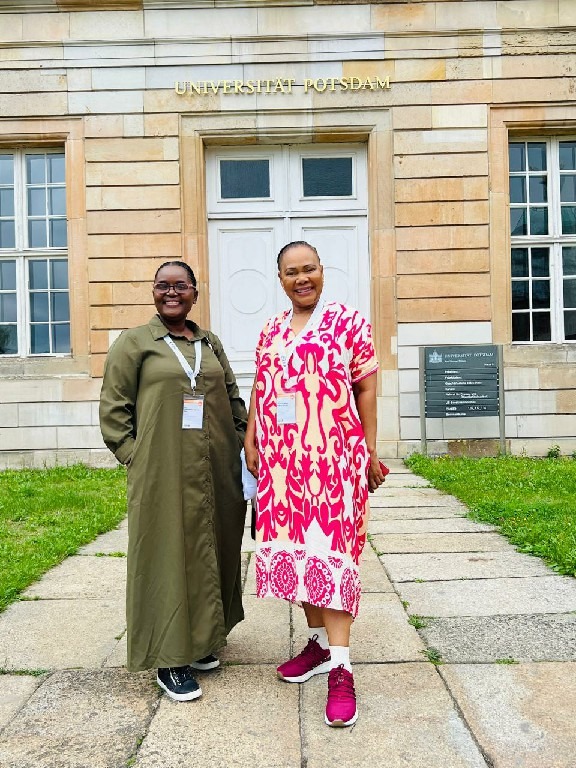
In a landmark achievement for Mangosuthu University of Technology (MUT), two of its senior staff members, Mbali Mkhize and Zama Sishi, have been selected to co-lead a critical communication work package in the South Africa–Sweden University Forum (SASUF+), marking a first for Historically Disadvantaged Institutions (HDIs) in South Africa.
Out of 26 universities, Mkhize and Sishi are the only representatives from HDIs chosen to jointly lead Work Package 6: Communication and Dissemination with the University of the Witwatersrand (Wits). Together with two Swedish universities, the team will be responsible for shaping the SASUF+ Communication Plan (2025–2028)—a strategic framework that underpins the initiative’s third phase of academic collaboration and impact.
SASUF+, which now includes 12 Swedish and 25 South African universities, is entering a dynamic new era focused on virtual collaboration, industry partnerships, pan-African networking, student involvement, and interdisciplinary research. It is aligned with the UN Sustainable Development Goals (SDGs) and the African Union’s Agenda 2063, setting its sights on inclusive, sustainable, and globally relevant outcomes.
Speaking on their appointment, Mkhize and Sishi said:
“We are grateful to show the world that great work is happening at HDIs, and we are happy that this work elevates MUT on a global stage.”
They also outlined the core objectives of the proposed communication plan, which they will co-develop and implement:
- Ensure effective dissemination of project outcomes
- Enhance visibility of SASUF+ across regions and sectors
- Strengthen engagement with key stakeholders
- Provide strategic direction for consistent communication
- Leverage diverse communication channels for maximum reach
- Support long-term impact and knowledge sharing.
In a further testament to their leadership on a global stage, Mkhize and Sishi were also awarded a DAAD National Multiplier Training (NMT) Grant early this year, which will support them in training international office professionals from all eight of South Africa’s HDIs. This initiative aims to build capacity and foster stronger global linkages for institutions historically left on the margins.
Their dual recognition not only highlights the calibre of talent at MUT but also signals a turning point for HDIs as they increasingly contribute to shaping global academic discourse.