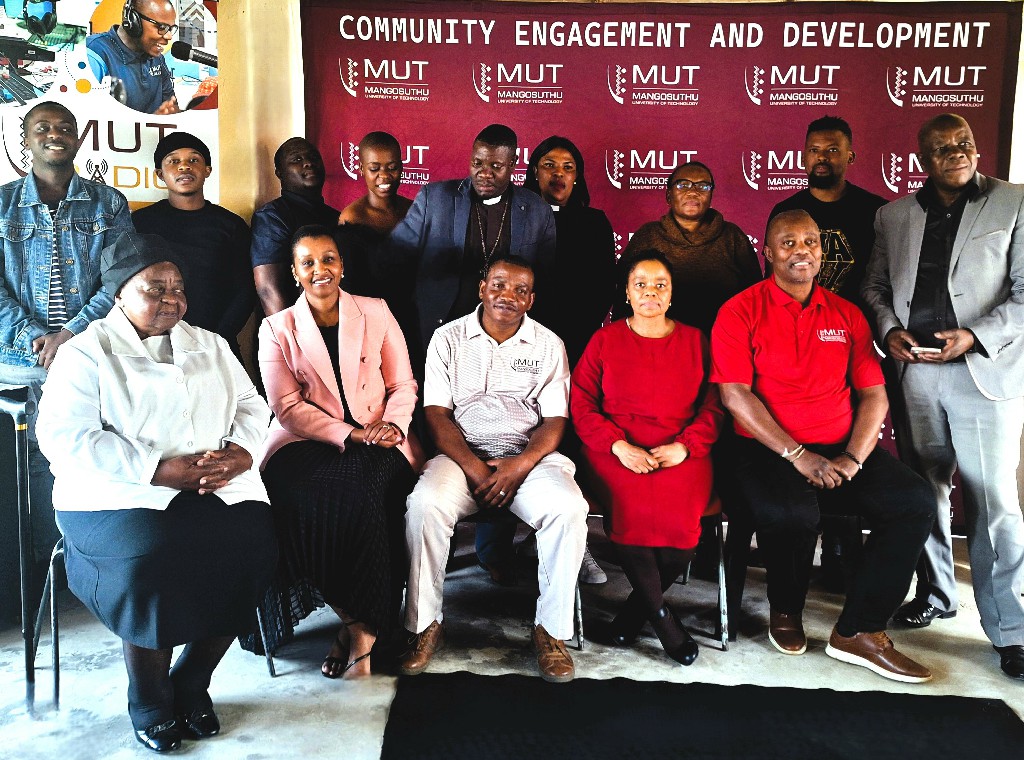
As promised, the CEAD has begun rolling out the month-long Mandela month programme by which the directorate aims to bring attention to those who need assistance of various kinds, as Nelson Mandela, South Africa’s first democratically elected President, would have liked. On 3 July, the CEAD led a University team – MUT Radio, Community Engagement and Development Directorate (CEAD), MUT Community Extension Department, and MUT Environmental Health Depart-ent- to a prayer that took place at the United Brethren Church of Southern Africa. The church is at Umlazi Township’s D Section. Professor Busisiwe Nkonki-Mandleni, Director of the CED, said their choice of the place was primarily directed by the directorate’s commitment to the University’s Anchor Strategy, which dictates that the University must collaborate with its immediate neighbours in forging development and the constructive sharing of information. “Yes, it is because of the Anchor strategy, and also the nation-building and social cohesion strategic objective, which is 4.1 of the University 2020-2025 strategy,” said Professor Nkonki-Mandleni. The document that Professor Nkonki-Mandleni is referring to will soon be replaced by the new one that the University is compiling.
The prayer focused on the gender-based and femicide (GBVF), violence, the economy, peace and stability, unemployment and poverty, and lastly, drugs and alcohol abuse. Five pastors led prayers, each focusing on a specific theme.
There was also time for a presentation on nutritional requirements for good health by Ntombenhle Ndlovu from the Department of Community Extension in the Faculty of Applied and Health Sciences. The Deputy Director in the directorate, Dr Mfanozelwe Shozi, said they included the presentation on nutritional food so that attendees would be informed about the quality of food and be able to address some of the persistent health problems. “Communicable diseases, which are diseases of lifestyle, are the leading cause of mortality and morbidity in South Africa. These included conditions like hypertension, diabetes, cardiovascular disease, strokes and certain cancers. These have become increasingly more prevalent in our Black communities, but can be prevented by making right lifestyle choices, like proper diet, exercise, and reducing substance and alcohol abuse. Dr Shozi said the challenge was that these conditions could inhibit the people’s ability to perform at their peak and may affect their mental, physical and spiritual health. “Also, educating our communities and community leaders, including our churches, will assist in disseminating the knowledge on the importance of good nutrition and health practices in preventing disease and for optimal functioning of individuals within the community,” said Dr Shozi. Dr Shozi said the presentation was about the importance of nutrition and wellness. Members of the community felt that the event was fruitful but suggested that more young people could be invited in the future to learn more about the programs offered at MUT. The event concluded with an elderly community member expressing her joy and gratitude for the visit, highlighting the need for continued support and guidance, especially for young people struggling with social ills.