
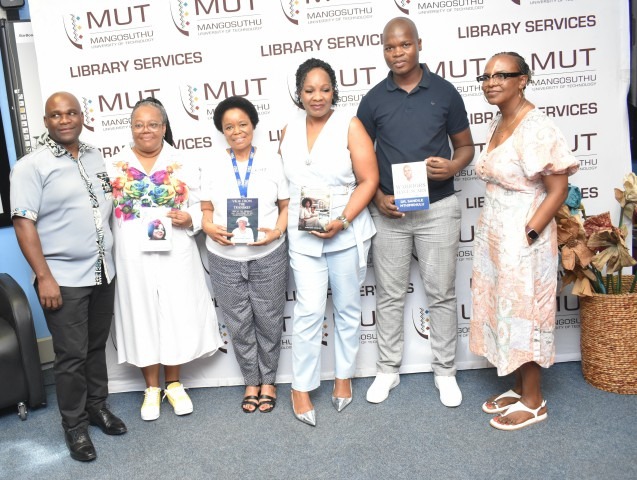
This week, Mangosuthu University of Technology (MUT) joined the national chorus in celebrating the vital role of libraries, hosting a vibrant “Library Week” from 16 to 20 March 2026. Under the evocative theme “Reclaiming Knowledge, Empowering Futures,” the University showcased the library not just as a repository of books, but as a dynamic engine for intellectual growth and ethical scholarship.
Bongiwe Nyide, Deputy Director of Library Services, described the week’s agenda as a “dynamic and impactful” programme designed to empower both students and staff.
The crown jewel of the week’s activities was a double book launch for MUT that brought local narratives to the forefront. The event featured three distinct voices, two of whom are members of the MUT community. Stella Mbonambi, Senior Committee Officer: launched her book titled: As Long as I Still Breathe, a poignant narrative centred on the theme of resilience. Professor Busisiwe Nkonki-Mandleni, Director: CEAD, introduced View from the Transkei: 1935 to the Present Day. This biographical work chronicles the life of the Professor’s mother, a teacher who overcame the trauma of being orphaned at age three and being raised by three different families. “Despite these challenges, she grew into a remarkable woman with unwavering strength,” shared Professor Nkonki-Mandleni.
Sanelisiwe Ngubane, a visiting author, presented How I Made My First Million as a Black Woman, a modern guide focused on entrepreneurship and economic empowerment.
Dr Sandile Mthimkhulu, a lecturer in the Faculty of Applied and Health Sciences and an accomplished author himself, delivered the keynote address. He emphasised the “transformative power of language” in shaping the future. During the session, his own work, Warriors Have Scars, was reviewed, sparking deep discussions on healing and personal evolution.
In a move to increase resource accessibility, the library also implemented an Amnesty Week. During this period, users were encouraged to return overdue materials without the burden of fines. While the initiative excluded lost items, it successfully promoted a culture of accountability, ensuring that essential academic resources are returned to the shelves for the benefit of the entire campus community. “The week highlighted the critical role of the academic library in fostering intellectual engagement and empowering our people with knowledge,” said Nyide.