
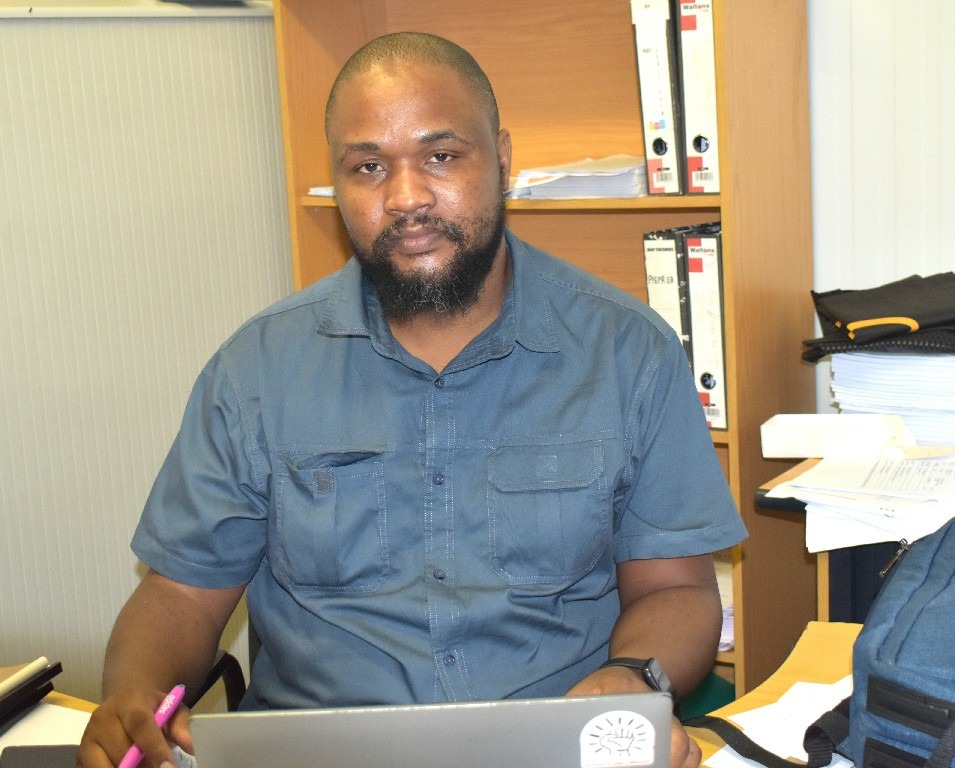
An academic from the Department of Agriculture, specialising in Animal Production, has been selected as one of the academics to join the Department of Higher Education and Training’s (DHET) Future Professors Programme (FPP). Dr Ndumiso Ncobela, a Lecturer in the department, has just received news that he was among those in line for a professorship in the near future. Dr Ncobela’s application is one of the nominations submitted by 26 universities for the 2025/2026 Cohort 4 of the first phase of the FPP. A selection committee “rigorously” reviewed all nominations with the aim of selecting the most suitable candidates, said Dr Nkosinathi Sishi, Director-General of DHET. In a letter to MUT Vice-Chancellor and Principal, Professor Nokuthula Sibiya, Dr Sishi said, “I am pleased to inform you that Dr Ndumiso Ncobela has been selected to participate in the programme. I would like to congratulate the University and Dr Ncobela on his selection in a highly competitive process”.
For his part, Dr Ncobela said he was “deeply honoured” to have been selected to participate in the FPP. “I feel truly humbled by this recognition, and by the trust placed in me to take full advantage of the opportunity. For me, this opportunity represents both a privilege and a responsibility to grow as a scholar, strengthen my research and teaching, and contribute meaningfully to addressing challenges facing higher education and our communities,” said Dr Ncobela. Dr Ncobela said he was “particularly excited” about the mentorship and exposure the programme offers, “which will enhance my research skills, academic writing, and teaching excellence.” The FPP aims to nurture and advance a new generation of professors who generate knowledge rooted in local realities yet connected globally.
Dr Ncobela’s research focuses on improving productivity, sustainability, and food security in monogastric livestock, with particular emphasis on pigs and poultry under varied production systems. Dr Ncobela said the FPP provides an ideal platform to refine this work, enhance his research capacity, and build collaborative networks that can generate solutions with real impact.